Your cart is currently empty!
Pre-Market Briefing & Execution Log | 2026-05-26
Part 1: Previous Session Review
Yesterday’s session was a useful reminder that win rate alone does not define trading quality. The book closed with 24 trades, 23 winners and 1 loser, yet the net result was -52.1 pips across GBPJPY, EURGBP, USDCHF, NAS100 and GBPUSD. That tells us the losing trade outweighed the combined small wins, which is usually a sign to review stop placement, position size and whether trades were being held through faster conditions than planned.
The main takeaway is practical: a high hit rate can hide weak asymmetry. GBPJPY and NAS100 in particular can expand quickly when liquidity thins or momentum accelerates, so execution discipline matters more than the number of green tickets. For today, the focus is not to recover losses, but to tighten risk and avoid carrying yesterday’s bias into a fresh macro session.
Part 2: Today’s Outlook & Watchlist
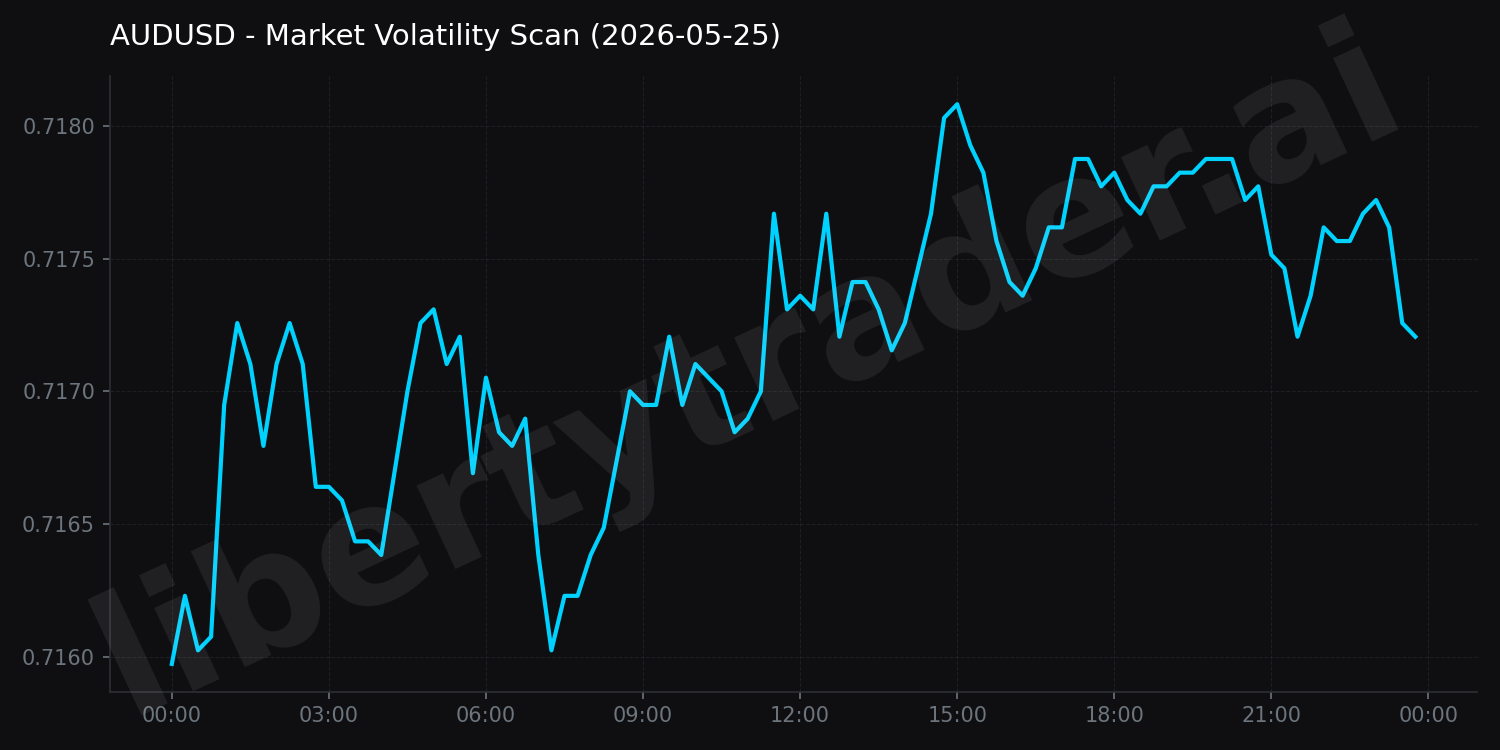
The high-impact calendar is concentrated in the antipodean currencies. At 21:30 UTC, Australia releases CPI m/m, CPI y/y and Trimmed Mean CPI m/m. At 22:00 UTC, New Zealand follows with the Official Cash Rate, the RBNZ Monetary Policy Statement and the Rate Statement, with the RBNZ Press Conference at 23:00 UTC. This is a clean event-risk window for AUD and NZD, with potential for sharp repricing if inflation or central bank guidance moves away from market expectations.
- AUD/USD: Watch for a volatility break around the CPI release. A hotter trimmed mean reading would support the Australian dollar if yields react higher, while a softer print could put AUD/USD under pressure. Avoid chasing the first spike; the second move after spreads normalize is often cleaner.
- NZD/USD: The RBNZ decision and press conference are the key drivers. The rate decision matters, but the tone of the statement and Governor’s guidance may matter more. A hawkish hold can squeeze NZD shorts, while softer language on inflation or growth could trigger a downside move.
Risk management should be conservative around the release windows. Wider spreads, slippage and sudden reversals are normal during these events. If trading the news, reduce size and define the invalidation level before entry. If not trading the release directly, wait for the first structure to form after the data and let the market show where real liquidity is sitting.